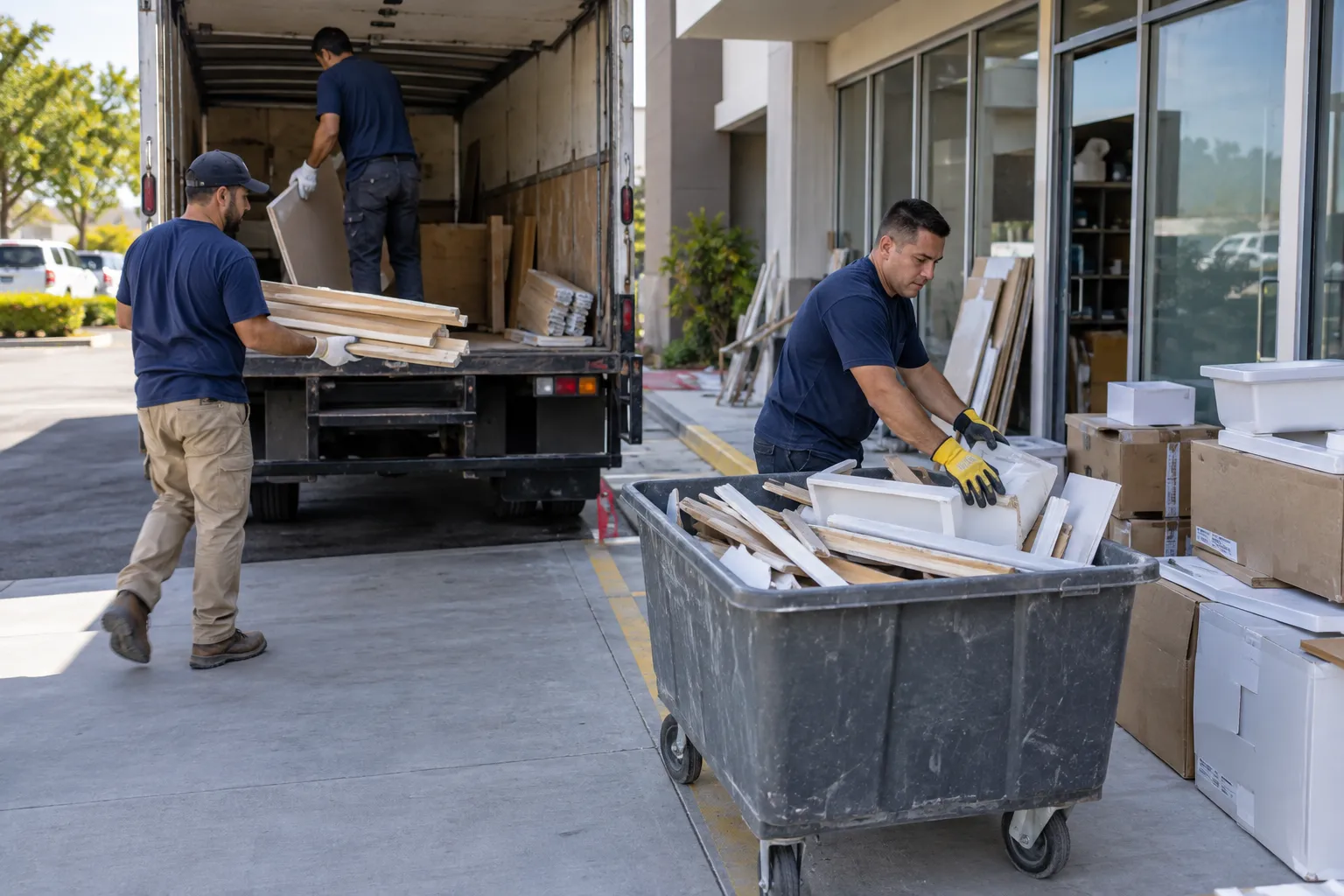
How to keep approved debris identifiable, accessible, and separate from active work. Use this guide before you request a quote so the removal provider can understand the material, access, and timing.
Confirm the material before staging it
List the debris by type and ask whether it is accepted. Clean wood, drywall, carpet, and packaging may be handled differently from concrete, roofing, treated material, or anything hazardous.
Keep the pile stable and reachable
Use a flat area near the approved loading route. Box small pieces, stack flat material low, and prevent loose debris from entering drive lanes or public walkways.
Separate hazards and unknowns
Do not mix paint, solvents, fuel, pressurized cylinders, chemicals, batteries, biohazards, or unidentified containers into a general debris load. Junk Dawgs directs customers to confirm questionable material before service.
Coordinate with the site schedule
Choose a pickup point after the material is released but before it blocks the next trade. Share gate access, loading restrictions, and the site contact who can approve any last-minute question.
Document what leaves
Photograph the approved staging area and keep a simple list by material type. After pickup, inspect the route and immediate area for loose pieces.
Questions to ask the provider
- Is every material type on the list accepted?
- What access information could change the crew or equipment plan?
- Should anything be boxed, emptied, or disconnected before arrival?
- How will the on-site quote and approval work?
- What happens if the actual load differs from the photos?
Ready to plan the job?
Review the companion service page, then call with your item list and access notes.
Construction Debris Removal